Customer service representative with headset on and computer in front of her, communicating with another person.

TWO-PARTY CONSENT REQUIREMENTS FOR RECORDING CALLS

Image by Slash RTC from Pixabay

For a call recording to be lawful, federal law[1] and most states require at least one party to the conversation to consent to the recording. However, many states go further, requiring two-party (or all-party) consent for a call to be lawfully recorded.

As the following list demonstrates, navigating the state law nuances of two-party consent for recording calls can require some finesse.

CALIFORNIA

Requires prior consent from all parties to record a confidential in-person, telephone, or video communication.[2]

However, case law indicates that where a person communicating is made aware that the conversation is being monitored or recorded, there may be no violation because there is no objectively reasonable expectation of privacy.[3] Moreover, by continuing with the conversation after being so warned, consent is given by implication.[4]

CONNECTICUT

Allows call recording if:

  • all parties have consented to the recording,
  • recording is preceded by a verbal notification which is recorded as well, or
  • recording is accompanied by an automatic tonal warning.[5]

DELAWARE

Requires two-party consent for recording telephone or other private conversations.[6]

However, a district court held the state law was meant to emulate its federal equivalent,[7] so one-party consent may, in some circumstances, satisfy the consent requirement.

FLORIDA

Requires prior consent from all parties to record an oral communication.[8]

However, the law does not cover when the person communicating had no reasonable expectation of privacy,[9] which may occur when the parties are notified at the outset that the call will be monitored or recorded.

ILLINOIS

Requires all parties to consent to recording either an in-person or transmitted communication when at least one party intends the communication to be of a private nature under circumstances reasonably justifying that expectation.[10]

MARYLAND

Requires all parties to a communication to consent to the recording.[11]

However, Maryland courts have interpreted this to be limited to situations where parties have a reasonable expectation of privacy.[12]

Read More
0
A cartoonish picture of a person working at a computer while talking on a headset to another person.

Two-Party Consent Requirements for Recording Calls

For a call recording to be lawful, federal law [1] and most states require at least one party to the conversation to consent to the recording. However, many states go further, requiring two-party (or all-party) consent for a call to be lawfully recorded. As the following list demonstrates, navigating the state law nuances of two-party consent for recording calls can require some finesse. CALIFORNIA Requires prior consent from all parties to record a confidential in-person, telephone, or video communication. [2] However, case law indicates that where a person communicating is made aware that the conversation is being monitored or recorded, there may be no violation because there is no objectively reasonable expectation of privacy. [3] Moreover, by continuing with the conversation after being so warned, consent is given by implication. [4] CONNECTICUT Allows call recording if:
  • all parties have consented to the recording,
  • recording is preceded by a verbal notification which is recorded as well, or
  • recording is accompanied by an automatic tonal warning. [5]
DELAWARE Requires two-party consent for recording telephone or other private conversations. [6] However, a district court held the state law was meant to emulate its federal equivalent, [7] so one-party consent may, in some circumstances, satisfy the consent requirement. FLORIDA Requires prior consent from all parties to record an oral communication. [8] However, the law does not cover when the person communicating had no reasonable expectation of privacy, [9] which may occur when the parties are notified at the outset that the call will be monitored or recorded. ILLINOIS Requires all parties to consent to recording either an in-person or transmitted communication when at least one party intends the communication to be of a private nature under circumstances reasonably justifying that expectation. [10] MARYLAND Requires all parties to a communication to consent to the recording. [11] However, Maryland courts have interpreted this to be limited to situations where parties have a reasonable expectation of privacy. [12] MASSACHUSETTS Prohibits secretly recording or secretly hearing wire or oral communications. [13] Therefore, where parties to a communication are notified beforehand of the recording, the recording may fall outside the statute on grounds that the recording is no longer being done in secret. MICHIGAN Prohibits recording private conversations without consent of all parties. [14] A “private conversation” is one in which a person reasonably expects to be free from casual or hostile intrusion or surveillance. [15] Michigan has also been argued to have an exception for recordings made by participants to the conversation, [16] but a district court subsequently declined to follow this reasoning and rejected the existence of a participant-exception. [17] The Michigan Supreme Court has been silent on this issue, so the participant-exception issue has not been settled. MONTANA Prohibits recording communications by use of a hidden device without the knowledge of all parties to the conversation. [18] However, this prohibition does not apply if the parties are notified of the recording, even if they do not expressly consent. [19] NEW HAMPSHIRE Requires consent of all parties for interception of communications. [20] However, consent may be implied when the circumstances around a situation demonstrate that a person was aware they were being recorded. [21] OREGON Requires two-party consent for recording in-person conversations, but only one-party consent for recording telecommunications. [22] A “telecommunication” is, in part, a transmission of pictures and sounds by aid of wire or similar connection between the transmission’s origin and reception points, and it includes all instrumentalities, equipment, and services incidental to such transmission. [23] Therefore, Oregon may, in certain circumstances, operate as a one-party consent state. PENNSYLVANIA Prohibits intercepting oral communications unless all parties consent. [24] To qualify, an oral communication must have been uttered by a person possessing an expectation that such communication is not subject to interception under circumstances justifying such expectation. [25] WASHINGTON Prohibits recording private communications or private conversations unless all parties give prior consent. [26] However, consent may be considered obtained whenever one party announces to all other parties that such communication or conversation is about to be recorded, so long as that announcement is also recorded. [27]
[1] 18 U.S.C. § 2511. [2] Cal. Pen. Code § 632(a). [3] Kearney v. Salomon Smith Barney, Inc., 39 Cal.4th 95 (2006). [4] Id. [5] Conn. Gen. Stat. § 52-570d(a). [6] Del. Code Ann. tit. 11, § 1335(a)(4). [7] U.S. v. Vespe, 389 F.Supp. 1359 (1975). [8] Fla. Stat. § 934.03(2)(d). [9] Fla. Stat. § 934.02(2). [10] 720 ILCS § 5/14-1. [11] Md. Code Ann., Cts. & Jud. Proc. § 10-402. [12] E.g.Malpas v. State, 116 Md.App 69 (1997). [13] Mass. Ann. Laws ch. 272, § 99(B)(4), (C)(1). [14] Mich. Comp. Laws § 750.539c. [15] People v. Stone, 463 Mich. 558 (2001). [16] Sullivan v. Gray, 117 Mich.App. 476 (1982). [17] AFT Michigan v. Project Veritas, 378 F.Supp.3d 614 (2019). [18] Mont. Code Ann. § 45-8-213(1)(c). [19] Mont. Code Ann. § 45-8-213(2)(iii). [20] N.H. Rev. Stat. Ann. § 570-A:2. [21]  State v. Locke, 144 N.H. 348 (1999). [22] Rev. Stat. Ann. § 165.540(1). [23] Rev. Stat. Ann. § 165.535(4). [24] 18 Pa. Cons. Stat. Ann. § 5704(4). [25] 18 Pa. Cons. Stat. Ann. § 5702. [26] RCW § 9.73.030(1). [27] RCW § 9.73.030(3).

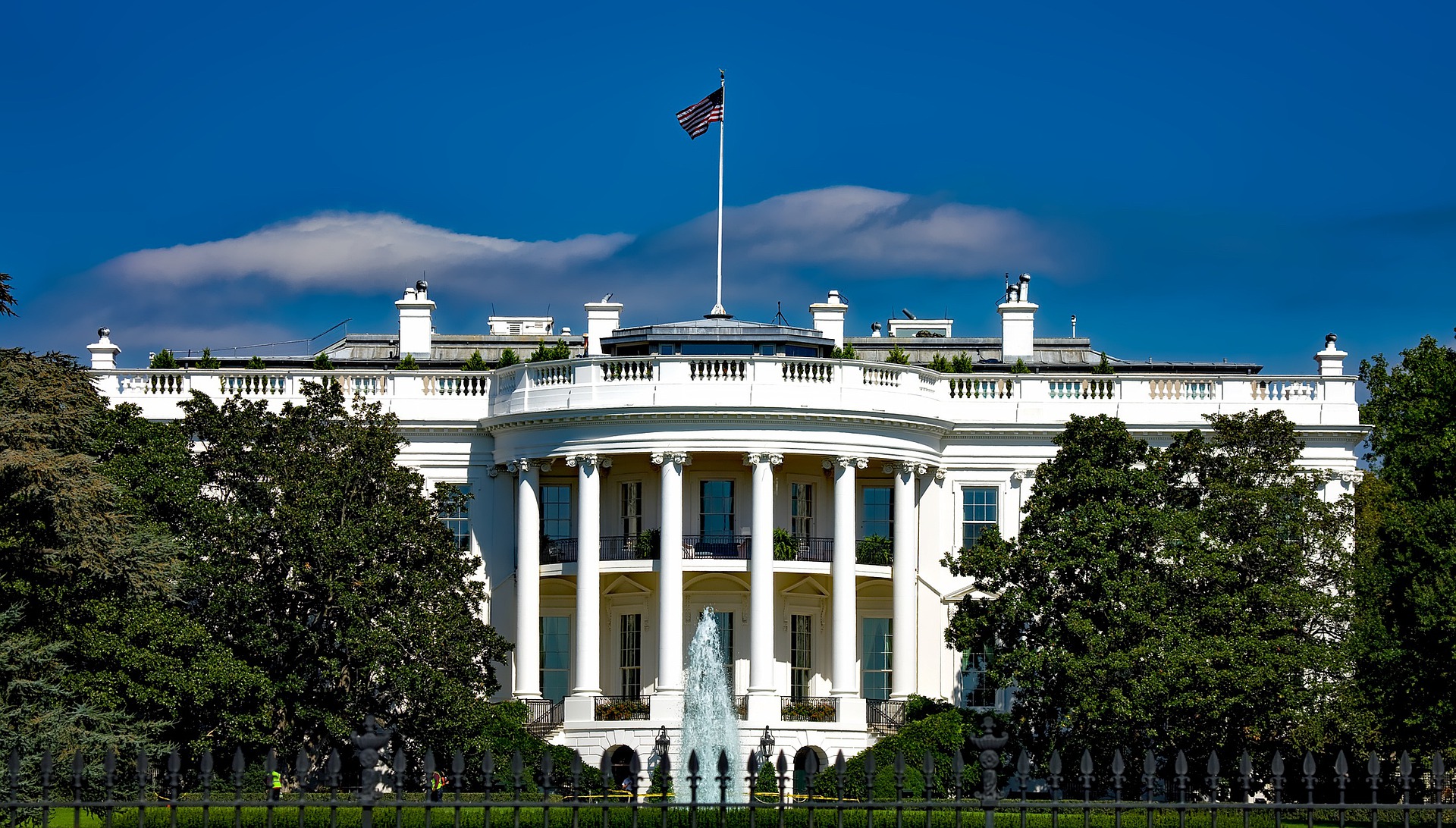
Photo of the front of The White House and lanscaping in front of The White House.

THE WHITE HOUSE’S BLUEPRINT FOR AI BILL OF RIGHTS

Image by David Mark from Pixabay.

In 2021, the global artificial intelligence (AI) market was estimated to value between USD 59.7 billion and USD 93.5 billion. Going forward, it is expected to expand at a compound annual growth rate of 39.4% to reach USD 422.37 billion by 2028.

However, as financial and efficiency incentives drive AI innovation, AI adoption has given rise to potential harms. For example, Amazon’s machine-learning specialists discovered that their algorithm learned to penalize resumes that “included the word ‘women’s,’ as in ‘women’s chess club captain.’” As a result, Amazon’s AI system “taught itself that male candidates were preferable.”

As our compiled list of guidance on artificial intelligence and data protection indicates, policymakers and legislators have taken notice of these harms and moved to mitigate them. New York City enacted a bill regulating how employers and employment agencies use automated employment decision tools in making employment decisions. Colorado’s draft rules require controllers to explain the training data and logic used to create certain automated systems. In California, rulemakers must issue regulations requiring businesses to provide “meaningful information about the logic” involved in automated decision-making processes.

In truth, the parties calling for AI regulation form a diverse alliance, including the Vatican, IBM, and the EU. Now, the White House joins these strange bedfellows by publishing the Blueprint for an AI Bill of Rights.

What is the Blueprint for AI Bill of Rights?

The Blueprint for AI Bill of Rights (“Blueprint”) is a non-binding white paper created by the White House Office of Science and Technology Policy. The Blueprint does not carry the force of law; rather, it is intended to spur development of policies and practices that protect civil rights and promote democratic values in AI systems. To that end, the Blueprint provides a list of five principles (discussed below) that – if incorporated in the design, use, and deployment of AI systems – will “protect the American public in the age of artificial intelligence.”

To be clear: failing to incorporate one of these principles will not give rise to a penalty under the Blueprint. Neither will adoption of the principles ensure satisfaction of requirements imposed by other laws.

However, the lack of compliance obligations should not inspire a willingness to ignore the Blueprint, for the authors expressly state that the document provides a framework for areas where existing law or policy do not already provide guidance. And given that many state privacy laws do not currently provide such guidance, the Blueprint provides a speculative glimpse at what state regulators may require of future AI systems.

The Blueprint’s Five Principles for AI Systems

Read More
0
A picture of the White House.

The White House’s Blueprint for an AI Bill of Rights

In 2021, the global artificial intelligence (AI) market was estimated to value between USD 59.7 billion and USD 93.5 billion. Going forward, it is expected to expand at a compound annual growth rate of 39.4% to reach USD 422.37 billion by 2028. However, as financial and efficiency incentives drive AI innovation, AI adoption has given rise to potential harms. For example, Amazon’s machine-learning specialists discovered that their algorithm learned to penalize resumes that “included the word ‘women’s,’ as in ‘women’s chess club captain.’” As a result, Amazon’s AI system “taught itself that male candidates were preferable.” As our compiled list of guidance on artificial intelligence and data protection indicates, policymakers and legislators have taken notice of these harms and moved to mitigate them. New York City enacted a bill regulating how employers and employment agencies use automated employment decision tools in making employment decisions. Colorado’s draft rules require controllers to explain the training data and logic used to create certain automated systems. In California, rulemakers must issue regulations requiring businesses to provide “meaningful information about the logic” involved in automated decision-making processes. In truth, the parties calling for AI regulation form a diverse alliance, including the VaticanIBM, and the EU. Now, the White House joins these strange bedfellows by publishing the Blueprint for an AI Bill of Rights. What is the Blueprint for an AI Bill of Rights? The Blueprint for an AI Bill of Rights (“Blueprint”) is a non-binding white paper created by the White House Office of Science and Technology Policy. The Blueprint does not carry the force of law; rather, it is intended to spur development of policies and practices that protect civil rights and promote democratic values in AI systems. To that end, the Blueprint provides a list of five principles (discussed below) that – if incorporated in the design, use, and deployment of AI systems – will “protect the American public in the age of artificial intelligence.” To be clear: failing to incorporate one of these principles will not give rise to a penalty under the Blueprint. Neither will adoption of the principles ensure satisfaction of requirements imposed by other laws. However, the lack of compliance obligations should not inspire a willingness to ignore the Blueprint, for the authors expressly state that the document provides a framework for areas where existing law or policy do not already provide guidance. And given that many state privacy laws do not currently provide such guidance, the Blueprint provides a speculative glimpse at what state regulators may require of future AI systems. The Blueprint’s Five Principles for AI Systems
  1. Safe & Effective Systems. The Blueprint demands that individuals be protected from unsafe or ineffective systems. To do this, an AI system should undergo pre-deployment testing, risk identification and mitigation, and ongoing monitoring. The system should be designed to protect individuals from harms stemming from “unintended, yet foreseeable,” uses or impacts, and it should not utilize inappropriate or irrelevant data in the design, development, or deployment stages.
  2. Algorithmic Discrimination Protections. The Blueprint warns that algorithmic discrimination based on a classification protected by law may violate legal protections. Designers and developers should, in part, include equity assessments as part of the AI system’s design, ensure accessibility for people with disabilities, and use representative data for demographic features.
  3. Data Privacy. Taking a page from the EU’s GDPR, the Blueprint states that AI systems should, by default, seek a person’s permission to use, access, transfer, and delete your data. However, the Blueprint recognizes that consent cannot always form the basis for processing, and it states that where consent is not possible, alternative privacy by design safeguards should be used. The Blueprint calls for greater data privacy protections for surveillance technologies and sensitive domains (e.g., health, work, criminal justice).
  4. Notice & Explanation. As with most data privacy laws and regulations, the Blueprint cares about providing individuals with meaningful and useful information, so a person knows how and why an outcome was determined by the AI system.
  5. Human Alternatives, Consideration, & Fallback. The Blueprint states that individuals should, where appropriate, be given the choice to opt out of automated systems in favor of a human alternative. The Blueprint stresses this option as crucial for sensitive domains (e.g., criminal justice, employment, education, and health).
The Takeaway Current and upcoming state laws, such as the California Privacy Rights Act and the Colorado Privacy Act, seek to regulate AI technologies yet currently lack guidance on how that regulation should occur. For this reason, although the Blueprint lacks force of law, innovators and adopters of AI technology should take notice of its overall themes, as these themes may manifest the force of law through adoption by state regulators and agencies. Until then, Metaverse Law will continue to monitor the legal landscape for new developments and update our reference material accordingly for guidance on AI and data protection.
Social media apps on the screen of an electronic device

CALIFORNIA’S SOCIAL MEDIA TRANSPARENCY LAW

Image by Pixelkult from Pixabay.

Disclosure Obligations, Hate Speech & AG Reports

Legislators across the United States have been grappling with how to regulate social media companies. In Texas, the 5th Circuit upheld a law limiting how social media platforms can moderate content.[1] In Florida, a brief was filed asking the U.S. Supreme Court to reverse the 11th Circuit’s decision to strike down a law preventing how social media platforms can moderate users.[2] Now, with Governor Newsom signing AB 587 into law, California joins the legislative efforts.

Effective January 1, 2024, AB 587 imposes new disclosure and reporting obligations on companies operating social media platforms. A social media platform falls under the law if:

  • The company operating the platform generated at least one hundred million in gross revenue during the preceding calendar year;[3]
  • The platform is a “public or semipublic internet-based service or application”[4] with users “in California;”[5]
  • A substantial function of the platform is to connect users to allow them to “interact socially” with each other in the platform;[6] and
  • Users can:
    • construct “public or semipublic” profiles for the purpose of signing in and using the platform;[7]
    • populate a list of other users with whom they share a social connection within the platform;[8] and
    • post content viewable by other users.[9]

In addition, the law does not apply to services or applications for which user interactions are limited to direct messages, commercial transactions, or consumer reviews of products, sellers, services, events, or places, or any combination thereof.[10]

Disclosure Obligations

A covered social media platform must disclose to users the existence and contents of the platform’s terms of service.[11] In addition, the terms of service must disclose:

Read More
1 12 13 14 15 16 28