0
Flag of California, depicting a large brown bear beside a red star, above the words "California Republic."

California: New AI laws in California – roundup of the 2025 legislative session

This article was originally published by OneTrust DataGuidance on November 24, 2025 and can be found on the DataGuidance website here.

California introduces comprehensive AI laws focusing on transparency, children’s safety, healthcare, antitrust, and law enforcement.

California has taken an aggressive stance towards artificial intelligence (AI) legislation and will likely set the standard for other US states. Back in 2024, Governor Newsom vetoed comprehensive AI safety legislation under bill SB 1047 and advised caution on regulations for this nascent and important technology. This year, Governor Newsom pressed ahead with a full slate of new AI laws. The reasons for this change in approach are many, including but not limited to the lack of federal AI legislation, the growing concern over children’s interactions with AI, especially sexualized content, and harmonization with more stringent requirements in the EU and elsewhere.

This year’s legislative session set records for the number and scope of new AI laws. For the roundup this year, Lily Li, of Metaverse Law Corporation, breaks down the new AI laws by scope and sector, noting where this may add on to existing California legislation and rulemaking from 2024-2025.

General AI safety, transparency, and risk assessments

  • SB 53: Transparency in Frontier Artificial Intelligence Act (Wiener) – Starting in January 2026, California will require large frontier AI developers to publish a framework detailing how they incorporate safety, security, and testing standards into their AI models. SB 53 also creates a mechanism for AI developers and the public to report critical safety incidents, and protects internal whistleblowers who report risks posed by frontier AI models. The law establishes significant penalties for companies that fail to comply, with fines of up to $1 million per violation.
  • AB 316: Artificial Intelligence defenses (Krell) – This amends California’s Civil Code. If a party to a lawsuit develops, modifies, or uses AI, this law prohibits them from asserting as a defense that the AI autonomously caused the harm.
  • AB 853: California AI Transparency Act (Wicks) – This bill expands the existing AI Transparency Act and modifies the effective date from January 1, 2026, to August 2, 2026. The California AI Transparency Act requires covered generative AI developers to provide an AI-detection tool to assess whether image, video, or audio content is created or altered by generative AI. This bill adds to the existing law by requiring large online platforms to embed provenance data into generated content. Starting January 1, 2028, users will also have the option to include latent disclosures on ‘capture devices’ such as cameras, video recorders, and other recorders.

This new California approach to AI transparency and safety legislation needs to be read in conjunction with the following existing laws.

  • California Privacy Protection Agency’s (CPPA’s) recently approved Cyber, Risk, ADMT, and Insurance Regulations – The CPPA’s most recently updated 127-page regulation package contains requirements governing cybersecurity audits, risk assessments, and automated decision-making technology. AI developers and systems that process personal information and meet certain California privacy thresholds will now face new cybersecurity audit and risk assessment requirements. In addition, automated and significant decisions concerning the provision or denial of financial or lending services, housing, education enrollment or opportunities, employment or independent contracting opportunities or compensation, or healthcare services will trigger significant notice, opt-out, and risk assessment requirements.
  • AB 2013: AI Training Data Transparency Act (Irwin-2024) – Passed last year, this law will require covered generative AI developers to publish online a high-level summary of the datasets used in the development of the generative AI system or service, including but not limited to whether personal information or copyrighted information is included in the training data. The law is scheduled to go into effect on January 1, 2026.

Children’s safety, age verifications, and companion chatbots

  • SB243: Companion Chatbots (Padilla) – This law applies to chatbots that provide human-like interactions and are capable of sustaining relationships across multiple interactions. Beginning July 1, 2027, developers of these ‘companion chatbots’ will need to develop and report protocols addressing suicidal ideation and self-harm to regulators and the public. The law requires AI disclosures, referrals to suicide hotlines or crisis text lines, and break reminders. SB 243 further requires developers to institute reasonable measures to prevent the chatbot from producing visual material of sexually explicit conduct or directly stating that the minor should engage in sexually explicit conduct. The legislation includes a private right of action to individuals who suffer ‘an injury in fact’ with statutory damages of $1,000 per violation, or actual damages if greater.
  • AB 1043 – Digital Age Assurance Act (Wicks) – Starting January 1, 2027, operating systems and covered application stores will be required to obtain age data from users and pass on age bracket data to developers when users download and launch an application.
  • AB 56: Social Media Warning Law (Bauer-Kahan) – Starting January 1, 2027, covered social media platforms will need to display a warning label to minors the first time a user accesses the platform each day, after three hours of active use, as well as once per hour of cumulative active use after that. The warning label must say ‘The Surgeon General has warned that while social media may have benefits for some young users, social media is associated with significant mental health harms and has not been proven safe for young users.’
  • AB 621: Deepfake pornography (Bauer-Kahan) – This amends California’s Civil Code and expands protections against deepfake pornography. The law explicitly provides a cause of action against individuals who create or disclose deepfake pornography if they know, or reasonably should know, that the depicted individual was a minor and also provides a cause of action against individuals who knowingly facilitate or recklessly aid or abet the creation or disclosure of such nonconsensual deepfake pornography. The bill confirms that a minor cannot consent to the creation or distribution of deepfake pornography.

California’s approach to AI and children has a long and complicated history, and these new laws should be read in conjunction with the following laws on the books.

  • California Age Appropriate Design Code (Wicks) – This law was signed on September 15, 2022, and was scheduled to go into effect on July 1, 2024. Modeled after the UK Age Appropriate Design Code, this law requires businesses to conduct impact assessments, provide Privacy by Default, estimate the age of all users, and restrict dark patterns. The law was enjoined in March 2025, but is being appealed by the California Attorney General.
  • Protecting Our Kids from Social Media Addiction Act (Skinner-2024) – This law is scheduled to go into effect on January 1, 2027, and prohibits covered social media platforms from providing addictive feeds to minors without verifiable parental consent. The law has so far escaped a constitutional challenge, but may face other court challenges prior to the effective date.

Healthcare AI and chatbots

  • AB 489: Health care professions: deceptive terms or letters: artificial intelligence (Bonta) – This law prohibits AI systems from falsely indicating or implying possession of a medical license or certificate through advertising, marketing, or other functionality. AB 489 also makes AI developers directly subject to the healthcare professional licensing board or enforcement agency if they develop such a system. Each use of a prohibited term, letter, or phrase shall constitute a separate violation.

California’s approach to AI in healthcare also needs to be read in conjunction with the following laws and guidance.

  • Legal Advisory on the Application of Existing California Law to Artificial Intelligence in Healthcare – In January 2025, California Attorney General Rob Bonta issued this advisory, setting forth California’s existing consumer protection, civil rights, competition, and data privacy laws governing healthcare AI.
  • SB 1120: Physicians Make Decisions Act (Becker-2024) – This law prohibits covered healthcare service plans from denying, delaying, or changing healthcare services based, in whole or in part, on medical necessity using AI, algorithms, or other software tools. Such determinations shall require a physician or licensed healthcare professional and review of individual circumstances. This law also requires written policies and procedures governing such determinations.
  • AB 3030: Artificial Intelligence in Health Care Services (Calderon – 2024) – This law applies to health facilities, clinics, physicians’ offices, or other health group practices that use generative AI for communications about patient clinical information. Under this bill, generative AI, which pertains to clinical information, must include:
    • a disclaimer that indicates the communication was generated by AI at the beginning of the interaction; and
    • clear instructions on how the patient can contact the appropriate person.

Antitrust and pricing discrimination

  • AB 325: Cartwright Act violations (Aguiar-Curry)  This amends California’s existing antitrust law, the Cartwright Act, to explicitly cover ‘common pricing algorithms.’ The law prohibits:
    • the use or distribution of a ‘common pricing algorithm’ as part of a contract, combination in the form of a trust, or conspiracy to restrain trade or commerce; or
    • coercion to set or adopt a recommended price or term, recommended by the common pricing algorithm for the same or similar products or services.

Complaints shall not be required to allege facts tending to exclude the possibility of independent action.

Law enforcement use of AI

  • SB 524 Law Enforcement Agencies (Arreguín) – SB 524 requires law enforcement to disclose if an official report was written either fully or in part using AI, as well as retain the first draft created by AI and an associated audit trail that, at minimum, identifies both the officer who used AI to create a report and the video and audio footage used to create a report, if any. SB 524 also prohibits AI vendors from sharing, selling, or otherwise using information, except as provided in the bill (e.g., troubleshooting, bias mitigation, quality control, legal purposes, etc.).

Employment and bias

While Governor Newsom vetoed SB 7, the No Robo Bosses Act, the Governor’s veto letter pointed to the CPPA’s ADMT regulations as addressing some of the bill’s requirements. Per Governor Newsom, SB 7 is ‘partially covered’ by these regulations, as they ‘allow employees and independent contractors to better understand how their personal data is used by automated decision technology.’ In addition, the California Civil Rights Council’s recently promulgated regulations state that California’s antidiscrimination laws apply to AI workplace tools. These regulations address another concern raised in SB 7, which sought to prohibit ADS systems from inferring a worker’s protected status.

0
Robotic hand and human hand pointing toward each other with the letters "AI" in between them.

Comparing EU and US AI legislation: déjà vu to 2020

This article was initially published in Reuters and Thomson Reuters Westlaw Today.   Lily Li of Metaverse Law discusses the landscape for AI legislation, with the passage of the European Union’s AI Act while states pass AI bills with differing thresholds, coverage and subject matter.   The landscape for EU and US AI legislation feels like a rinse and repeat of data privacy legislation in 2020. Back then, the General Data Protection Regulation (GDPR) was in full force and effect, while California and other states were developing privacy laws at breakneck speed. Many companies were caught unaware by GDPR, only to face a new onslaught of US state-by-state privacy laws.   Now, companies face the same problem. The EU has just passed a comprehensive AI law, the EU AI Act, which imposes significant compliance obligations and antitrust-style mega fines.   In the United States, state legislatures are passing AI bills at a breakneck speed, with differing thresholds, coverage and subject matter. Do global companies bite the bullet and comply with the EU AI Act globally, or should there be a more nuanced jurisdiction-by-jurisdiction approach?   Comprehensive and imposing   The EU AI act is a comprehensive law that has been in development for years by EU regulators. One of its unique features, not seen in US legislation, is a complete ban on certain “prohibited AI practices” (Article 5, https://bit.ly/4gQHfe8). Some of these prohibited practices include assessing whether an individual is likely to commit a crime and real-time biometric identification by law enforcement (think Minority Report), as well as social scoring of individuals.   In addition to setting forth prohibited practices, the EU AI Act designates a list of high-risk AI practices. This includes, but is not limited to, use of AI in employment decisions, credit scores, insurance and access to services. For these high-risk AI practices, AI providers need to implement a full risk management program that considers the following factors:  
  • Data governance
  • Technical documentation
  • Recordkeeping
  • Human oversight
  • Accuracy, robustness, and cybersecurity management
  • Quality management
  Like the GDPR, the EU AI Act imposes significant fines. This can be up to $35,000,000 or 7% of total worldwide revenue, whichever is higher, for engaging in prohibited AI practices (Article 99, https://bit.ly/3XRewgl), and up to $15,000,000 Euros or 3% of the total worldwide annual turnover, whichever is higher for other violations (Article 99, https://bit.ly/3XRewgl). The law requires each EU country to designate at least one independent and impartial body to monitor and enforce the EU AI Act’s requirements.   In contrast, the US is following a patchwork approach. Instead of comprehensive federal legislation, we are seeing a state by state and agency approach. To date, these laws generally fall into four main categories: (i) consumer protection; (ii) employment rights; (iii) image and likeness rights; and (iv) transparency/ risk assessment requirements for high-risk AI processing.   Consumer protection   For state consumer protection laws governing AI, Utah is one of the first movers. In May of 2024, it added requirements governing AI to its consumer protection statutes. Utah’s AI Policy Act requires businesses in Utah to disclose the use of generative AI tools, and also makes businesses liable for any consumer protection violations by these generative AI tools.   At the federal level, the FTC has used its consumer protection authority under Section 5 of the FTC Act, in order to regulate against unfair and deceptive practices in commerce concerning AI. In 2022, Weight Watchers agreed to pay a $1.5 million civil penalty in a settlement with the FTC, in part over allegations that the company improperly collected children’s data to train its models and algorithms. This settlement included “algorithmic disgorgement” — i.e., Weight Watchers was required to delete any models trained on such data.   More recently, on Sept. 25, 2024, the Federal Trade Commission (FTC) has cracked down on companies that make misleading or fraudulent claims about their use of AI tools. This included taking action against DoNotPay (https://bit.ly/3BtSWXW), a company that claimed to offer an AI service that was “the world’s first robot lawyer.”   DoNotPay agreed to a $193,000 settlement with the FTC, pursuant to a consent order. The consent order (https://bit.ly/4dNyjmN) also requires DoNotPay to refrain from “representing that its Service or any other internet-enabled product or service that it offers operates like a human lawyer or any other type of professional, unless that representation is not misleading and DoNotPay possesses competent and reliable evidence to substantiate the representation.” In addition, DoNotPay is required to notify consumers of the order and to submit compliance reports to the FTC.   AI in employment decisionmaking   At the employment level, Illinois recently enacted a law that prohibits the use of AI systems from discriminating against employees or job applicants based on any protected classes.   In addition, this amendment explicitly bans the use of race or zip code when used as a proxy for race in AI systems making employment decisions. Illinois’ requirements join New York City Local Law 144 (https://on.nyc.gov/3zHlSva) in regulating automated employment decision-making tools. While Local Law 144 does not include an explicit ban on the use of race or zip code in AI systems, it has very stringent notice and audit rights.   Where employers use AI systems “to substantially assist or replace discretionary decision making,” Local Law 144 requires publicly available third-party bias audits of automated employment decision-making tools.   Image and likeness rights   Generative AI is also regulated by state laws and cases governing image and likeness rights. Following the actors and writers strike in Hollywood, and high-profile litigation by Sarah Silverman and others, California has acted. In the last week, Governor Gavin Newsom signed two AI bills designed to protect entertainers.   AB 2602 requires contracts with actors and other performers to specify whether generative AI will be used to create a replica of the performer’s voice or likeness. AB 2836 bans the use of digital replicas for deceased performers, without the consent of the performer’s estate.   Transparency and risk assessment   The majority of US state comprehensive data privacy laws require transparency concerning the use of AI to process personal data and make decisions that impact important rights, such as employment, housing, and access to services. In addition, these laws generally give consumers the right to opt out of such processing.   Colorado’s AI Act, slated to go in effect in 2026, goes even further. It imposes risk assessment and bias assessment requirements for any “high-risk artificial intelligence system” that makes or is a substantial factor in making a consequential decision.   For purposes of the law, “consequential decision” means a decision that has a material or similarly significant effect on the provision or denial to any consumer of, or the cost or terms of:  
  • Education
  • Employment
  • Financial or lending services
  • Essential government services
  • Health-care services
  • Housing
  • Insurance
  • Legal service
  The Colorado AI Act has even more substantial transparency and notification obligations. As just one example, developers and deployers of “high-risk” AI systems are required to publicly post on their websites a description of the high-risk systems, as well as describe how the AI system manages the risks of bias. This includes further reporting to the Attorney General of “any known or reasonably foreseeable risks of AI discrimination arising from the intended use of the system.” Section §6-1-1702(5).   Where to go from here?   The trend lines are clear, and AI legislation is here to stay. While the US has not enacted federal AI legislation of the same scope as the EU AI Act, we already see significant risk assessment and transparency requirements. As a result, AI companies need to go global with their AI risk management strategies and not get left behind.   Lily Li is the founder and president of Metaverse Law. She advises global clients on their AI risk assessments and data protection impacts assessments, and supports her clients’ overall governance, risk, and compliance (GRC) programs. In addition, she holds the GIAC Certified Forensic Analyst (GCFA) certification for advanced incident response and digital forensics and certifications in information privacy such as the FIP, CIPP/US/E/M. She is based in Newport Beach, California, and can be reached at info@metaverselaw.com.
0
Image containing the United States flag, Illinois state flag, and city of Chicago flag.

The Illinois Human Rights Act Addresses the Use of AI In Employment Decisions

Artificial intelligence (AI) is becoming an integral part of business operations, including hiring and managing employees. As these systems become more involved in our daily lives, legislators are taking note.   On August 9, 2024, Illinois Governor J.B. Pritzker signed Bill 3773 into law, regulating the use of AI in employment decisions. This law joins New York City Local Law 144 and the Colorado Artificial Intelligence Act in addressing the use of AI in employment contexts.   This law goes into effect on January 1, 2026.   Key Takeaways of Bill 3773     Who is protected? The Illinois Human Rights Act prohibits discrimination for protected classes in Illinois, including discrimination based on “race, color, religion, sex, national origin, ancestry, age, order of protection status, marital status, mental or physical disability, military status, sexual orientation, pregnancy or unfavorable discharge from military service.”   Bill 3773 amends the Act by expanding its scope to include employment discrimination resulting from the use of AI.   What are the requirements? Building on the rights of the Illinois Human Rights Act, this amendment provides that employers may not use AI systems that have a discriminating effect on employees or job applicants based on any protected characteristics under the Act. Additionally, this amendment explicitly bans the use of race or zip code when used as a proxy for race in AI systems making employment decisions.   The amendment also contains a notice requirement: The employer must provide notice to the employee or applicant that the employer is using AI in their decisionmaking. This notice must be included if AI is used in the “employment-related activities” defined below, and the Illinois Department of Human Rights is tasked with providing rules on the means and time periods for providing notices.   What employers and systems does this impact? The law applies to an employer that:
  1. Employs one or more employees within Illinois for 20 or more weeks per year;
  2. Uses artificial intelligence systems such as generative AI models or any machine-based systems that use an input to infer how to generate outputs; and,
  3. Uses those artificial intelligence systems in employment-related activities – including recruitment, selection, hiring, promotion, and more – for employees, interns, and applicants.
  If an employer satisfies these thresholds of applicability, then the law most likely applies and the employer should review whether they are complying with the law’s requirements.   Similar Laws Regulating AI in Employment   Illinois follows Colorado and New York City with legislation that restricts the use of AI in employment decisions.   Colorado Artificial Intelligence Act In May 2024, Colorado enacted the Colorado Artificial Intelligence Act, which includes parameters around “high-risk” systems. These systems include those which make “consequential decisions,” including decisions related to employment or employment opportunities. If a company is using a high-risk system, they must also adhere to specific notice, risk management, and impact assessment requirements. Additionally, they must also provide additional disclosures if the high-risk system makes an adverse decision. This includes adverse employment decisions.   New York City Local Law 144 The Illinois legislation also joins New York City Local Law 144. Signed in 2021, this law was the first legislation enacted by any state or local government that regulated the use of AI tools for employment decisions.   New York City Law 144 applies to employers and employment agencies in New York City that use “automated employment decision tools” to screen candidates or employees for employment decisions.   It requires a mandatory independent bias audit conducted within one year of using the AI tools, a summary of which must be disclosed on the employer’s website. Additionally, the employer must notify the candidate or employee that the AI system is used in connection with the decision, and shall allow a candidate to require either an accommodation or alternative selection process. The notice must disclose the job qualifications and the characteristics that the AI tool is using, and all notices must be given no less than 10 days before use.
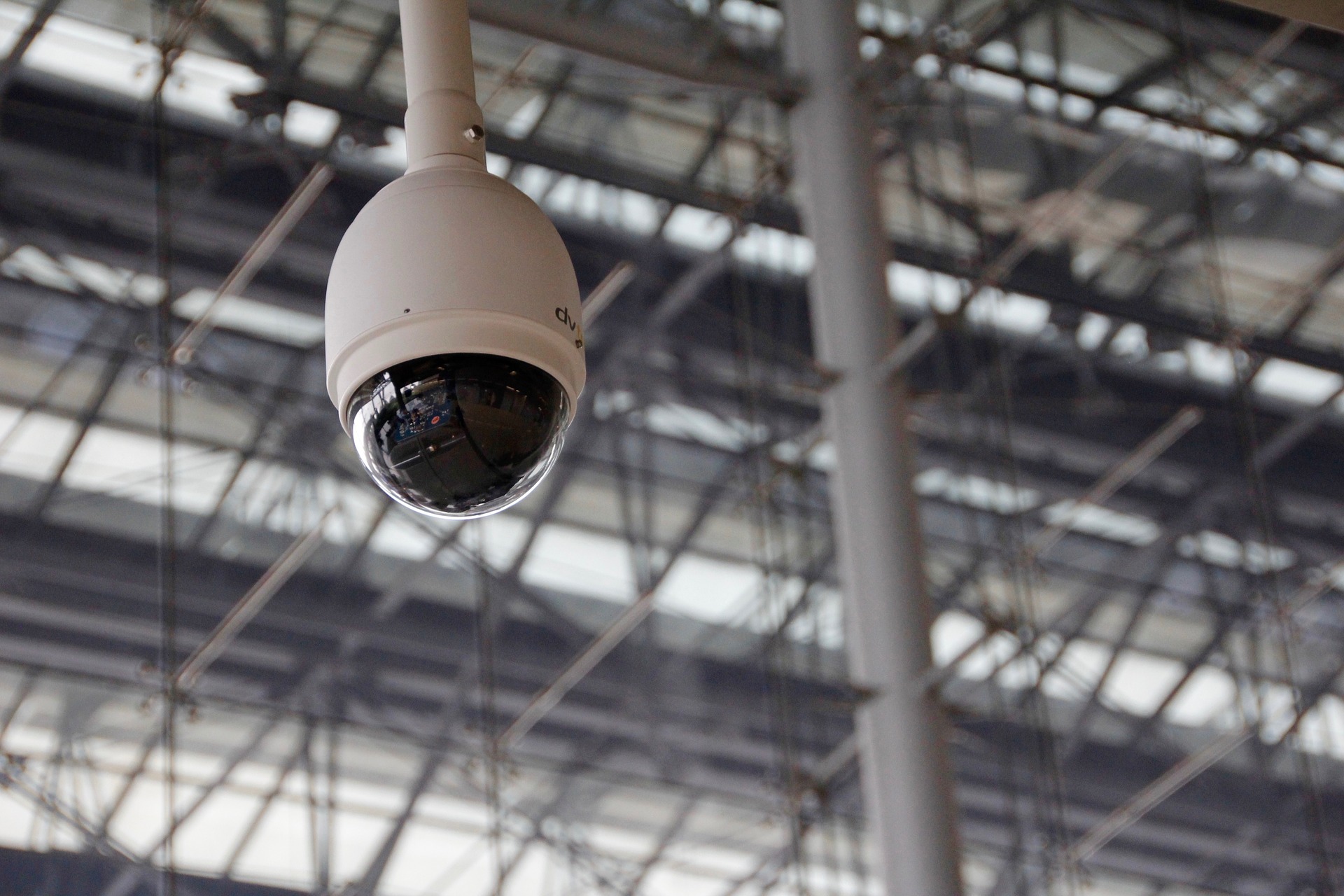
Surveillance camera hanging from the top of a building.

Can US Employers Monitor Their Employees at Work?

Image by Peggy und Marco Lachmann-Anke from Pixabay.

With the ongoing events that began in 2020 (the COVID-19 pandemic and ensuing quarantine), many U.S. employers transitioned to remote work arrangements to accommodate local or state stay-at-home mandates. During this time, some employers engaged in certain types of remote workplace monitoring, such as the use of mobile device management (MDM) or productivity monitoring software.

There are many legitimate reasons why employers may monitor their employees in the U.S.

  • Customer-imposed contractual security requirements might require video surveillance on premises or implement data loss prevention (DLP) technology to prevent the unauthorized access or deletion of confidential data.
  • New privacy and security laws require employers to protect the confidentiality and privacy of consumer data, which requires monitoring of access to personal information.
  • Employers are required to protect access to proprietary information, or it may lose trade secret status if disclosed too broadly.
  • Employers can also generally monitor to improve the quality of their services and workforce productivity and satisfaction, such as through call monitoring or review of employee internet use.
  • Finally, employers have an overwhelming legitimate interest in preventing workplace harassment and criminal actions, which may require investigation and review of employees.

E-mails and Company Equipment (Computers, Phones)

U.S. employers generally have the right to monitor employees on company computers, phones, and other devices when (i) monitoring is done in the ordinary course of business, and (ii) employees are notified of the monitoring. In this situation, courts usually find that employees do not have an expectation of privacy regarding their communications and other activities on these devices.

Read More