Cell phone with image of lock on the screen.

Reasonable Security: Implementing Appropriate Safeguards in the Remote Workplace

Photo by Franck on Unsplash

In 2020, with large portions of the global workforce abruptly sent home indefinitely, IT departments nationwide scurried to equip workers of unprepared companies to work remotely.

This presented an issue. Many businesses, particularly small businesses, barely have the minimum network defenses set up to prevent hacks and attacks in the centralized office. When suddenly everyone must become their own IT manager at home, there are even greater variances between secure practices, enforcement, and accountability.

“Reasonable Security” Requirements under CCPA/CPRA and Other Laws

Under the California Consumer Privacy Act (CCPA), the implementation of “reasonable security” is a defense against a consumer’s private right of action to sue for data breach. A consumer who suffers an unauthorized exfiltration, theft, or disclosure of personal information can only seek redress if (1) the personal information was not encrypted or redacted, or (2) the business otherwise failed its duty to implement reasonable security. See Cal. Civ. Code § 1798.150.

Theoretically, this means that a business that has implemented security measures—but nevertheless suffers a breach—may be insulated from liability if the security measures could be considered reasonable measures to protect data. Therefore, while reasonable security is not technically an affirmative obligation under the CCPA, the reduced risk of consumer liability made reasonable security a de facto requirement.

However, under the recently passed California Privacy Rights Act (CPRA), the implementation of reasonable security is now an affirmative obligation. Under revised Cal. Civ. Code § 1798.100, any business that collects a consumer’s personal information shall implement reasonable security procedures and practices to protect personal information. See our CPRA unofficial redlines.

Read More
social network patents

Facebook, Patents, and Privacy: Social Media Innovations to Mine Personal Data

Social Media Patents & Privacy Data

[©2016. Published in GPSOLO, Vol. 37, No. 5, September/October 2020, by the American Bar Association. Reproduced with permission. All rights reserved. This information or any portion thereof may not be copied or disseminated in any form or by any means or stored in an electronic database or retrieval system without the express written consent of the American Bar Association or the copyright holder]

* Updated November 25 to include references to CPRA/ Prop24.

The episode “Nosedive” of the television series Black Mirror envisions a society built on social credit scores. In this dystopia, all social media networks have converged into one platform—think Facebook, TikTok, Yelp, and Equifax combined.

This umbrella social platform allows users to rate each other on a five-point scale after each social interaction. Those with a high score gain access to job opportunities, favorable zip codes, and even high-status relationships. Those with a low score have the social ladder kicked out from under them, leading to a downward cycle of estrangement—and in the case of Black Mirror’s protagonist, jail time.

While the society in “Nosedive” seems far-fetched, is the technology behind it plausible?

Facebook Patents That Impact Privacy

According to Facebook’s patents, the answer is a resounding “yes.”

In a series of filings spanning almost a decade, Facebook has obtained several patents that allow social media platforms to track, identify, and classify individuals in new and innovative ways. Below are just few.

Tracking individuals via dust. U.S. Patent No. 9485423B2, “associating cameras with users and objects in a social networking system” (filed September 16, 2010, patented June 25, 2013), allows social media networks to identify an individual’s friends and relationships by correlating users across the same camera. To do so, an algorithm analyzes the metadata of a photo to find a camera’s “signature.”

Read More
PCI Expert Summer Virtual Event on November 5, 2020. Hosted by RSI.

Metaverse Law to Speak at PCI Expert Summit

Metaverse Law will be speaking at the PCI Expert Summit hosted by RSI Security.

This year, the annual PCI Expert Summit event is an online/virtual all-day conference on Thursday, November 5, 2020, from 9:00am to 5:00pm PST. The agenda includes panels with PCI experts in addition to breakout sessions on specialized topics, such as incident and data breach response. Continuing Professional Education (CPE) credits are available.

Register at https://www.rsisecurity.com/pciexpertsummit/.

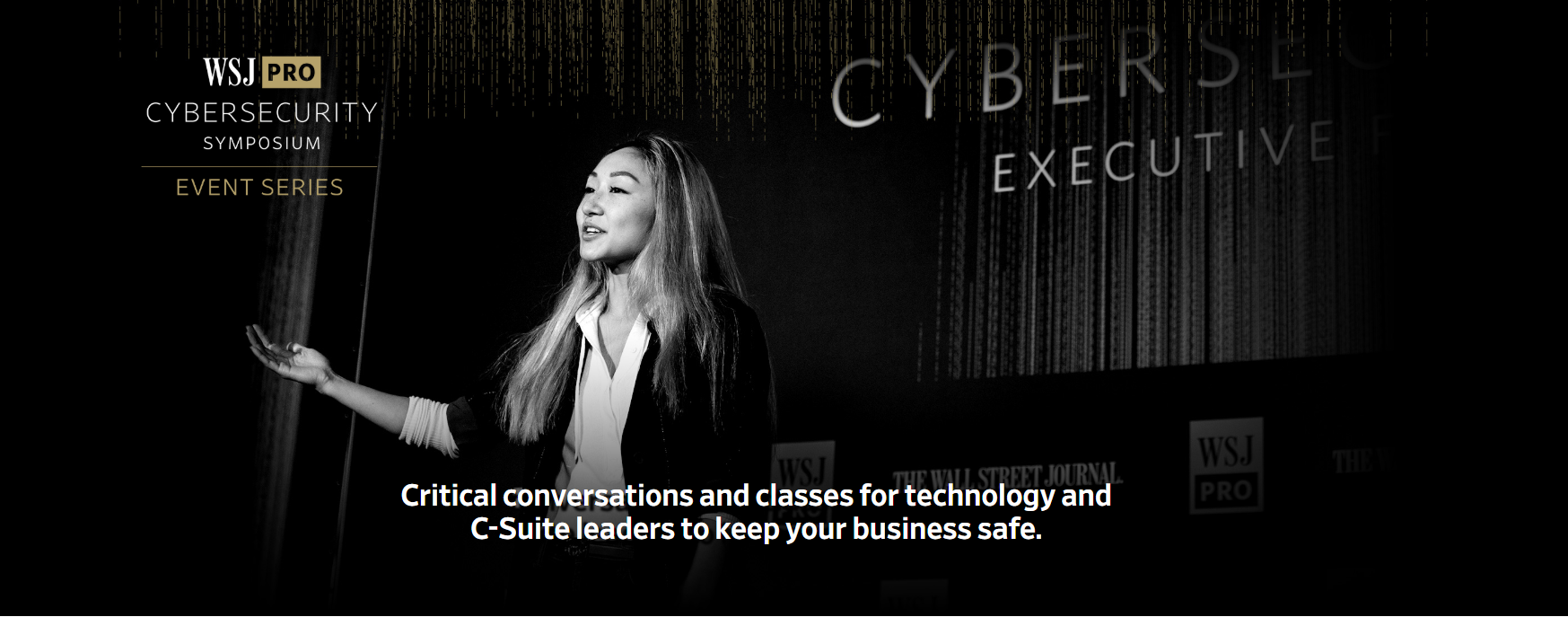
WSJPro Cybersecurity Symposium

Metaverse Law to Speak at WSJ Cybersecurity Symposium

Metaverse Law will be one of the speakers at the Wall Street Journal’s Cybersecurity Symposium and will focus on the applicable laws and regulations per business type.

It is a two day event in San Diego, CA from Thursday, January 9 to Friday January 10, 2020. The agenda for both days includes breakfast and registration, several speakers, networking breaks, lunch, a cocktail reception on the ninth, and a cybersecurity strategy development bootcamp on the tenth.

A detailed itinerary as well as registration details can be found at https://cybersecurity.wsj.com/symposium/san-diego/#schedule

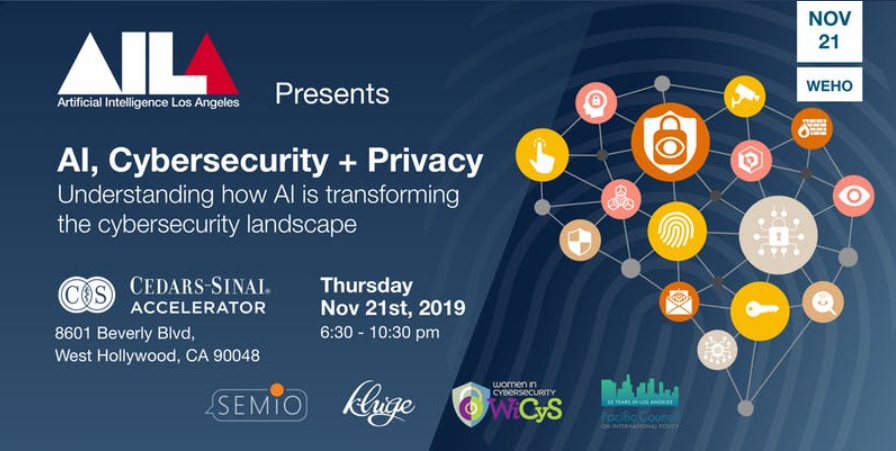
AL, Cybersecurity + Privacy event flyer

Metaverse Law to Speak at Artificial Intelligence Los Angeles Seminar

Metaverse Law will be one of the speakers at the AI LA Community’s seminar focused on cyber security and privacy. The seminar will be held at The Cedars-Sinai Accelerator in West Hollywood on Thursday, November 21st.

The event is from 6:30PM to 10:00PM and includes networking, a panel of speakers followed by a Q&A, and concludes with another round of networking.

Tickets and further event details can be found at https://www.eventbrite.com/e/ai-cybersecurity-and-privacy-tickets-80204145759

1 3 4 5